
Bluffing in poker
In poker, you can win a hand in two ways. You can win by having the best hand at showdown. Or you can win by making your opponent fold…

Poker
starting hands
Poker starting hands are the foundation of every winning player’s strategy. Before you think about bluffs, hero calls or advanced concepts, you need to understand which hands to play and why.
Strong decisions before the flop create easier and more profitable situations on later streets. That is why solid preflop strategy is one of the most important skills in poker.
If you improve your poker starting hands selection, you immediately remove many costly mistakes from your game.

Every hand in poker begins preflop. That means your starting hand decision is the first and most repeated decision you make. If you choose weak poker starting hands too often, you will regularly end up with second-best pairs, dominated draws or difficult marginal spots.
By contrast, if you start with stronger hands, you more often make top pair with a strong kicker, overpair or strong draws. These hands are much easier to play and easier to value bet.
Over thousands of hands, disciplined starting hand selection makes a large difference in win rate.
Good preflop strategy is not about playing many hands. It is about playing the right hands from the right positions.
Most winning players at low and mid stakes play roughly 15 to 25 percent of hands overall. The exact number depends on position, stack depth, and game format, but the principle is clear.
Tight is usually right, especially for beginners.
You should avoid entering pots with weak offsuit hands and random suited cards, especially from earlier positions. Playing too loose is one of the most common preflop mistakes.
If you want a structured baseline, practicing defined poker starting hands inside the Preflop Trainer helps you build discipline and confidence.
To make decisions easier, it helps to group poker starting hands into categories.
Premium hands include:
These hands are strong enough to raise and usually 3-bet for value. They perform well against most ranges.
Strong hands include:
These are often opened from most positions and sometimes 3-bet depending on the situation.
Speculative hands include:
These hands are more dependent on position and stack depth. They work best when you can win large pots after hitting a strong combination such as a set or straight.
Understanding these categories improves your preflop strategy and reduces guesswork at the table. If you want a deeper explanation of how hands are grouped and why they perform differently, read more in our guide on preflop hand categories.
Position has a huge impact on which poker starting hands you should play.
In early position, many players act after you. Because of that, you should play a tight range made up mostly of strong hands.
In middle position, you can open slightly more hands, but you still need to be disciplined.
In late position, especially on the cutoff, button and small blind, you can play a wider range. You will often act last postflop, which gives you more information and control.
This is why the same hand can be a fold in early position but a profitable open on the button. If you are new to the concept, read our guide to poker positions to understand why position is such a powerful advantage.
If you want to clearly see how poker starting hands expand and tighten by position, the Range Viewer inside Poker Trainer lets you compare early, middle and late position ranges. Read about the opening hands used in each position in Preflop Opening Ranges.
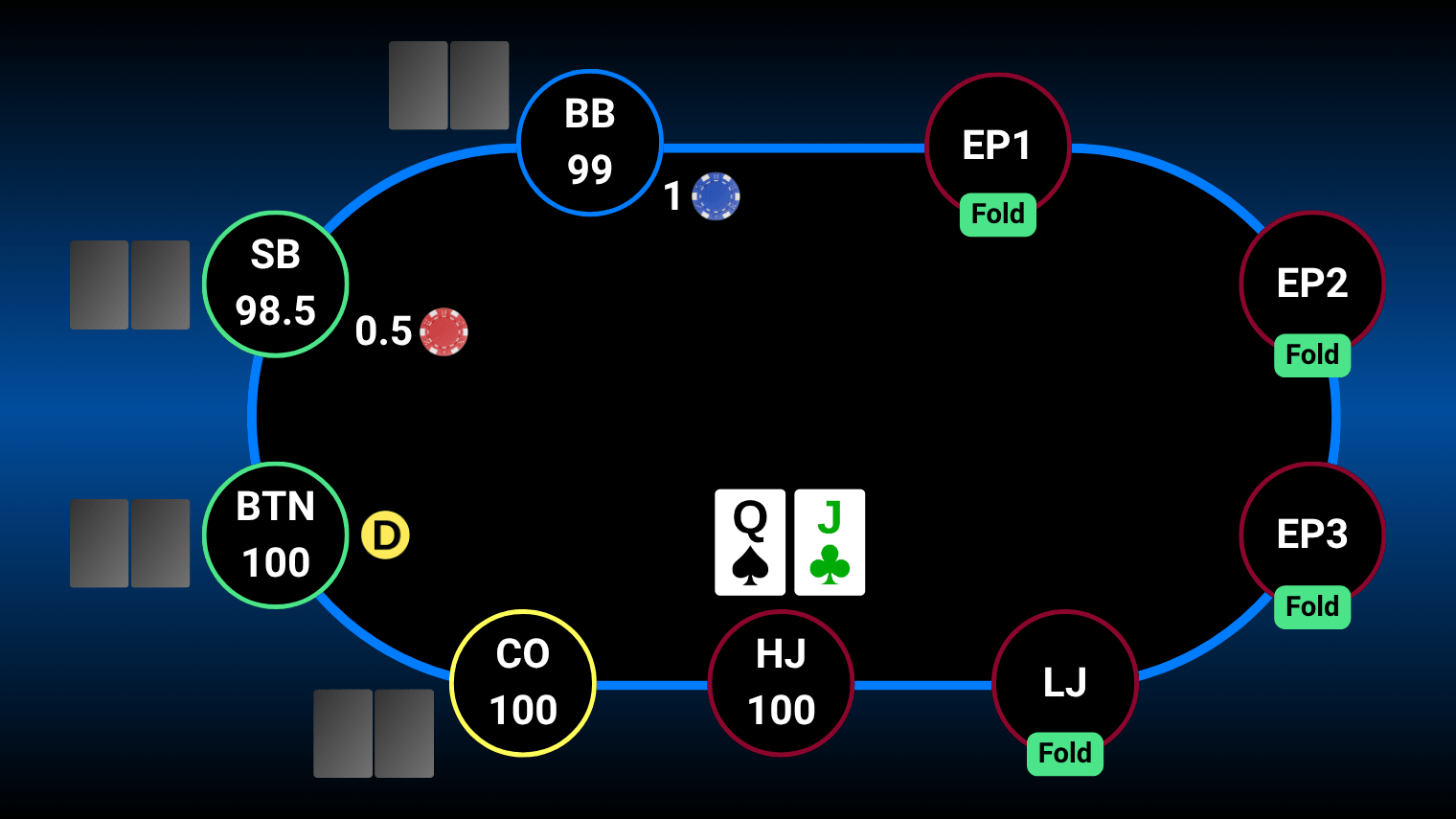
A strong preflop strategy is usually built around raising or folding.
Open-limping as the first player into the pot is rarely correct in standard cash games and tournaments. Limping creates weak ranges and multiway pots where your equity is harder to realize.
When you raise, you can win the pot immediately. You also build the pot with strong poker starting hands and take initiative.
Initiative is important because it allows you to continuation bet more effectively on many flops. It also makes it easier to apply pressure against weaker ranges. If you want to understand how to punish passive players, read our guide on winning money from limpers.
Aggression is a key part of preflop strategy.
A 3-bet in poker means re-raising after someone has opened the pot. Strong poker starting hands such as AA, KK, QQ and AK are clear value 3-bets in most situations.
There are many additional hands that can be profitable 3-bets. The exact hands depend heavily on the positions involved. In general, the later the positions, the wider the 3-betting range becomes.
For example, 3-betting from the button against a cutoff open can include more medium strength and suited hands than 3-betting from early position against an under the gun raise.
By 3-betting, you put pressure on your opponent and often take control of the hand. You either win the pot immediately or go to the flop with a stronger and more defined range.
Calling too often without a clear plan is a common leak. In many spots, especially from early and middle position, a raise or fold approach is stronger than flat calling.
Practicing 3-bet spots inside the Poker Simulator helps you understand which poker starting hands belong in your value range and which should be folded.
For focused preflop strategy training, choose Preflop mode and apply the “vs raise” filter. This allows you to train specifically against an open raise and improve your 3-bet decisions from different positions.
If you want a deeper theoretical explanation, you can also read our article on Preflop 3-betting ranges and how to respond with the correct ranges.
Preflop strategy changes with stack depth.
With deep stacks, speculative poker starting hands such as small pairs and suited connectors gain value. They can win large pots when they hit strong combinations.
With short stacks, raw equity becomes more important than playability. Hands that may not look strong deep stacked can become profitable all-in hands with 10 to 20 big blinds.
Understanding how stack size affects starting hand value is a key step toward intermediate play.
The Poker Simulator helps you connect preflop strategy with realistic postflop situations so you can see how different stack depths change the outcome.
Many players lose money because they:
These mistakes often lead to difficult and expensive postflop decisions.
Fixing your starting hand selection is often easier than fixing complex river mistakes. That is why focusing on preflop strategy gives a strong return on study time.
Poker starting hands are the base of your entire strategy.
If you choose the right hands, respect position and play aggressively with your strongest holdings, you create profitable situations again and again.
Strong preflop strategy does not guarantee success on its own. But without it, long-term success is very difficult.
If you want to improve quickly, start by mastering your poker starting hands. Structured practice in the Poker Simulator and research in the Range Viewer makes this process simple and effective.
In poker, you can win a hand in two ways. You can win by having the best hand at showdown. Or you can win by making your opponent fold…

Poker is hard, but it is also fun and rewarding. If you like reading, poker books can be a good complement to practice, videos, and training…