
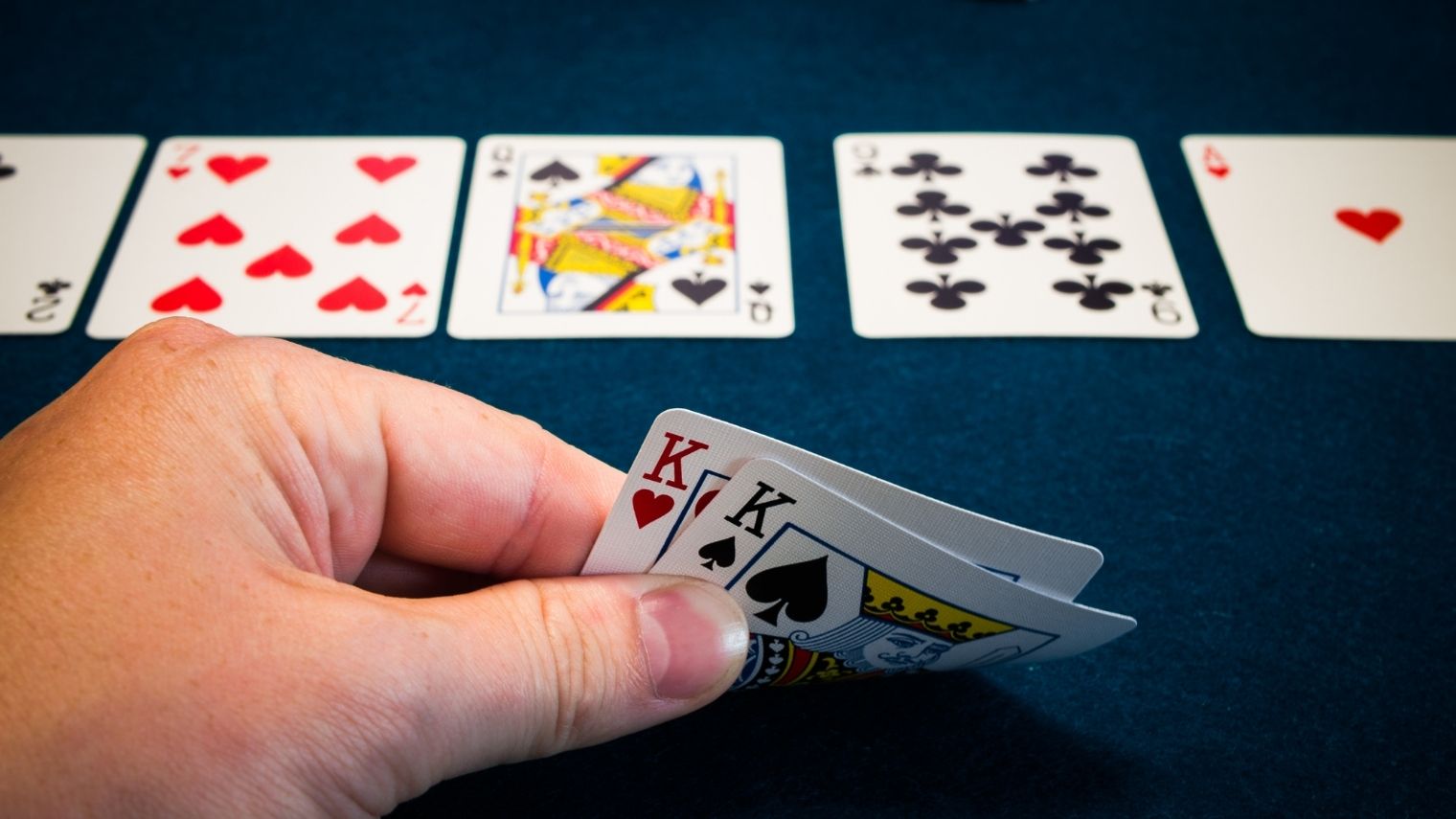
How to play after the flop
Many hands end before the flop. But the biggest mistakes and biggest wins usually happen after the flop. That is where pots grow, ranges narrow…
Learn to
play poker
Poker is easy to start, but hard to learn in the right order. Many beginners jump straight into playing, then get stuck. They lose, feel confused and do not know what to fix first.
This guide is a roadmap for poker for beginners. It shows you what to learn first, what to learn next and where to go when you feel lost. You do not need to learn everything at once. You just need a good path.
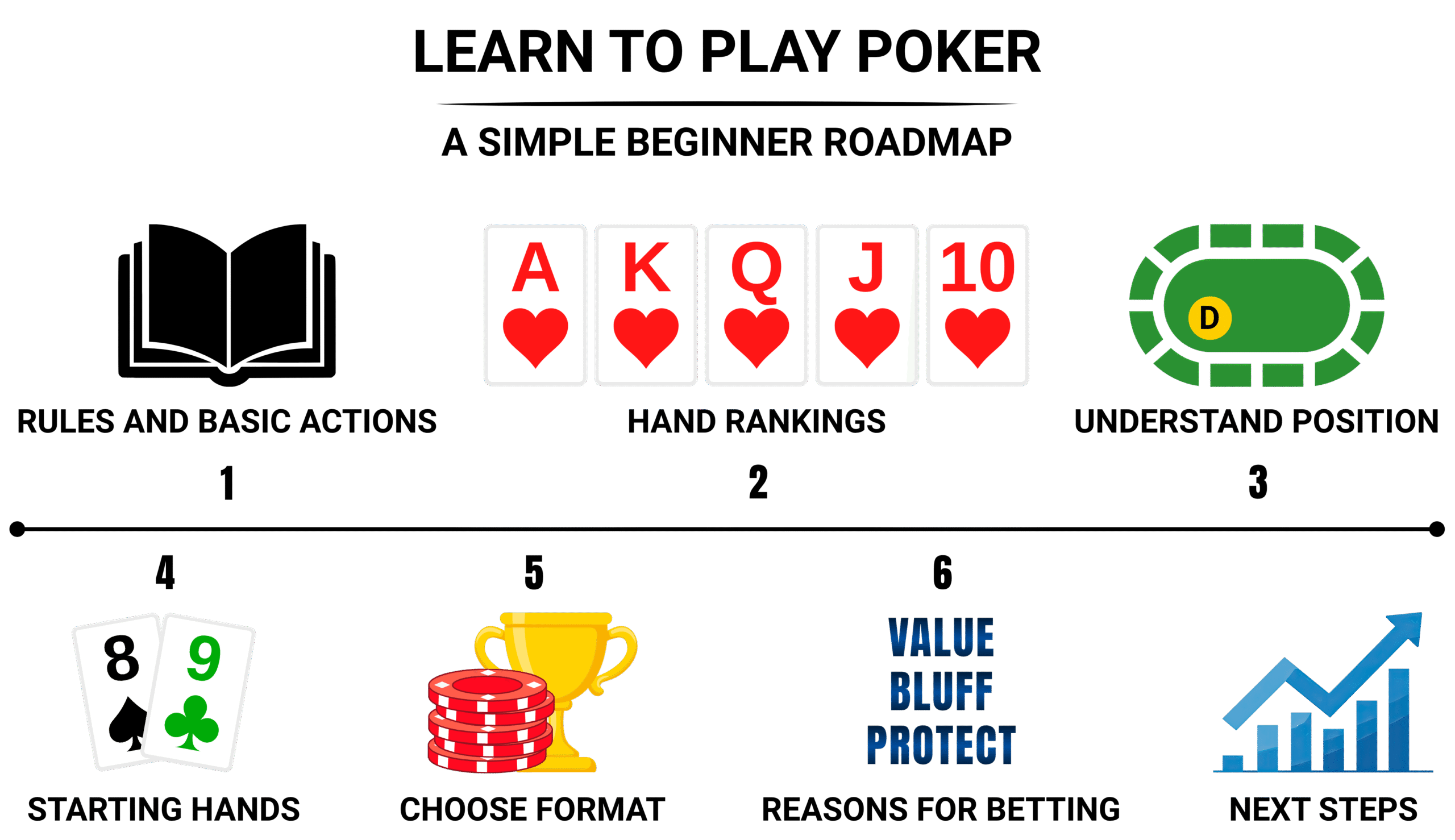
Your first goal is simple: understand how a hand works from start to finish.
You should know:
Start here: Introduction to Texas Hold’em.
Many beginners lose money simply by misreading hands or missing what the board allows.
Learn here: Poker hand rankings.
Position means who acts first and who acts last. Acting last gives you more information and makes poker easier. If you learn one strategic concept early, make it this.
Learn here: Poker positions.
This is where you can improve fast. Most beginners play too many hands and especially too many weak hands out of position. A solid beginner rule is to play tighter in early position, looser in late position and mostly raise or fold when the pot is unopened.
Learn here: Poker starting hands for beginners.
Texas Hold’em is the same game everywhere, but the format changes how you learn and how swingy it feels.
Cash games mean you can sit down with a stack (for example 100 big blinds) and play any number of hands. You can quit whenever you want, reload if you lose and every hand is “normal poker.” This is usually the easiest format for learning solid fundamentals.
Tournaments (often called MTTs) have a start time and a fixed buy-in. Blinds keep going up, so stacks get shorter over time and more hands become all-in decisions. Tournaments are fun, but the results are more swingy and it can take a long time to get a big score.
Sit & gos are small tournaments that start when enough players join. They are quicker than MTTs and can be a nice middle ground, but you still have the “no reload” and rising blinds like tournaments.
It also helps to know the difference between online and live. Online gives you many more hands per hour, so you improve faster. Live is slower, but games are often much softer.
Play money is fine for learning the rules, but it is not great for learning real strategy, because people play very differently when chips have no value. If you can, switch to very small stakes once you know the basics.
Most beginner mistakes happen after the flop. Not because the situations are “advanced”, but because you do not have a clear reason for your bet.
A simple rule is that most bets fit into one of these categories:
If you can explain which one your bet is, your decisions become much clearer.
Learn here: The three reasons to bet.
Once you feel comfortable with the basics above, you have a lot of good directions to go next. Pick one area at a time.
Good next topics are:
Most beginners do not lose because they “do not know enough theory.” They lose because of a few habits that quietly bleed chips. If you avoid the mistakes below, you will improve much faster.
Playing too many hands
This is the biggest one. Weak hands cause tough decisions after the flop, especially when you are out of position. If you are unsure, fold more and stick to solid starting hands.
Limping a lot
Limping means just calling the big blind when no one has raised yet. It gives other players a cheap chance to see the flop and often leads to multiway pots where it is harder to win. A good default is to mostly raise or fold in unopened pots.
Calling too much “to see what happens”
Calling without a clear reason is expensive. Before you call, ask: what am I hoping for, and what happens on the next card if I miss?
Chasing draws with the wrong price
Draws are fine, but they are not always a call. If the bet is large and you are unlikely to hit, folding is often the best play. Learn basic outs and pot odds early.
Thinking one pair is always strong
Top pair feels strong, but it is often just a medium hand. On boards with many draws or when someone shows a lot of strength, one pair can easily be second best.
Overvaluing suited cards and low pairs
Suited hands and small pairs can be playable, but they do not automatically mean profit. They work best when stacks are deep and you are in position. Beginners often play them in bad spots and lose small amounts many times.
Bluffing too much or bluffing the wrong people
Bluffing is part of poker, but beginners often bluff in spots where opponents rarely fold. A simple rule: bluff less when starting out and value bet more.
Tilting and chasing losses
Poker has variance. If you start trying to “win it back,” your decision quality drops fast. Take breaks, lower stakes or stop the session when you feel emotional.
If you want one simple mindset: play fewer hands, avoid limping, value bet your strong hands and do not call big bets without a plan.
Many hands end before the flop. But the biggest mistakes and biggest wins usually happen after the flop. That is where pots grow, ranges narrow…
Range construction in poker is about how you organize and play groups of hands, not just the two cards you are holding. Strong players…