
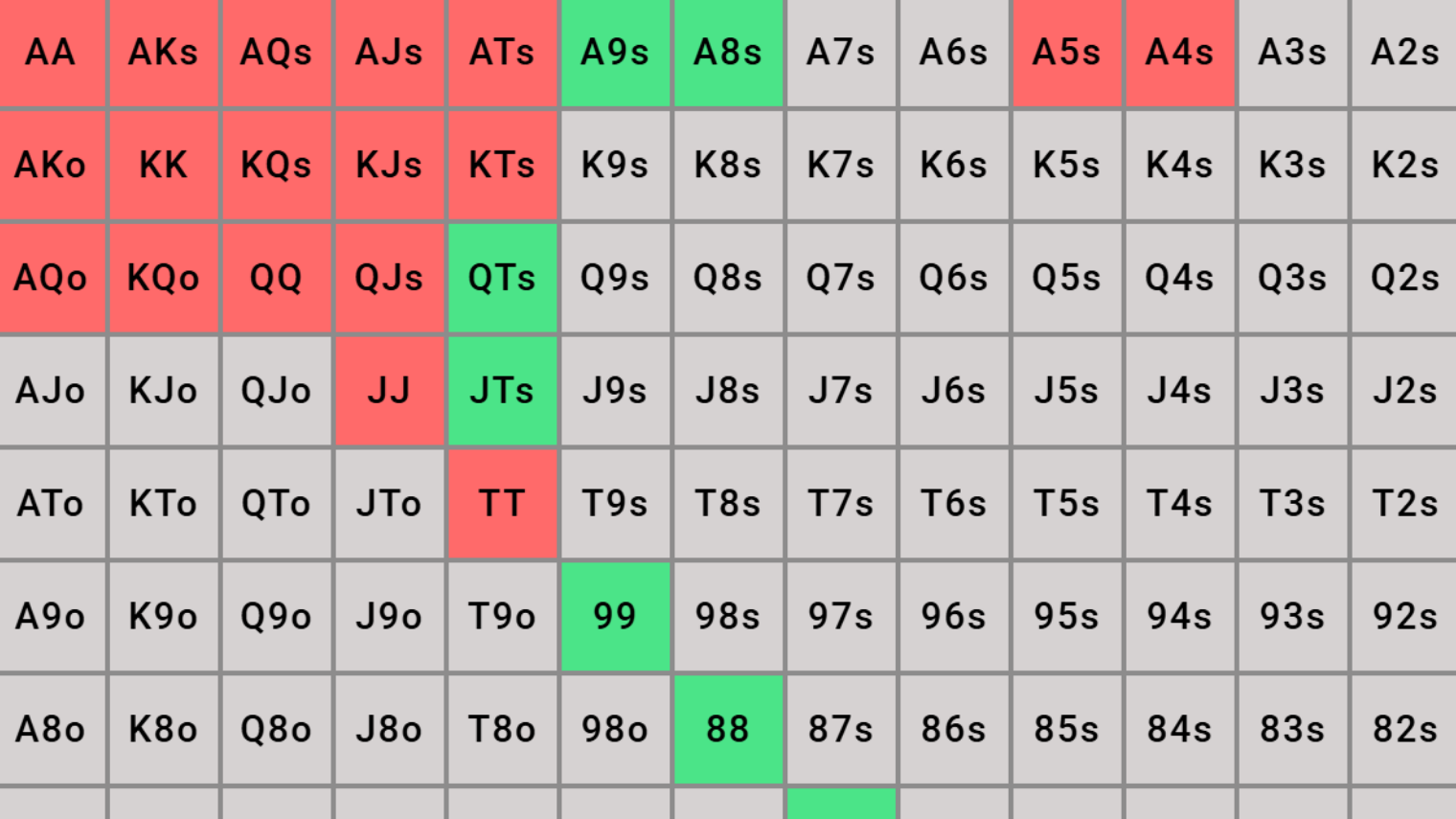
Preflop range charts
Preflop range charts are one of the fastest ways to improve your poker results. They give you a clear default strategy for which hands to play and…
Poker
positions
One of the most important concepts in poker is position. Where you sit at the table strongly affects which hands you can play, how aggressive you can be, and how profitable your decisions are.

Poker is a game of incomplete information. You do not know what hands your opponents have and you do not know which cards will come next.
Because of this, acting later in the hand is a major advantage. The more information you have before making a decision, the better your decision can be. This is why position matters so much.
Poker is traditionally played with up to nine players, known as a 9-max table. It is the clearest way to learn position, because it shows all positions in their full form.
Poker Trainer uses the following position names, listed in preflop action order. EP1 is first to act preflop. The Big Blind acts last preflop.
| Order | Position | Abbreviation |
|---|---|---|
|
1 |
Early Position 1 |
EP1 |
|
2 |
Early Position 2 |
EP2 |
|
3 |
Early Position 3 |
EP3 |
|
4 |
Lojack |
LJ |
|
5 |
Hijack |
HJ |
|
6 |
Cutoff |
CO |
|
7 |
Button |
BTN |
|
8 |
Small Blind |
SB |
|
9 |
Big Blind |
BB |
Different poker sites and tools use different names for early and middle positions. The table below shows the most common alternatives. Cutoff, Button, Small Blind, and Big Blind are almost always called by the same names.
| Poker Trainer | Alternative |
|---|---|
|
EP1 |
UTG |
|
EP2 |
UTG+1 |
|
EP3 |
UTG+2 |
|
LJ |
MP1 |
|
HJ |
MP2 |
A 6-max table is a shortened version of a 9-max table where the earliest positions are removed. Most online cash games today are played 6-max.
In 6-max, the positions in action order are:
The same rules about position apply. There are just fewer players.
In poker, acting last is usually best. When you act after your opponents, you see what they do first. You see who bets, who checks and who shows strength or weakness. This extra information makes your decisions easier and more accurate.
Because of this, positions closer to the button are stronger than positions farther away. The button is the strongest position at the table.
Preflop, the action starts with LJ at a 6-max table, and moves clockwise around the table.
After the flop, the order changes. On the flop, turn, and river, the action always starts with the player closest to the button who is still in the hand.
If the small blind is still in the pot, the small blind acts first. Then comes the big blind, LJ, HJ, CO and finally the button. This means the button acts last on every postflop street.
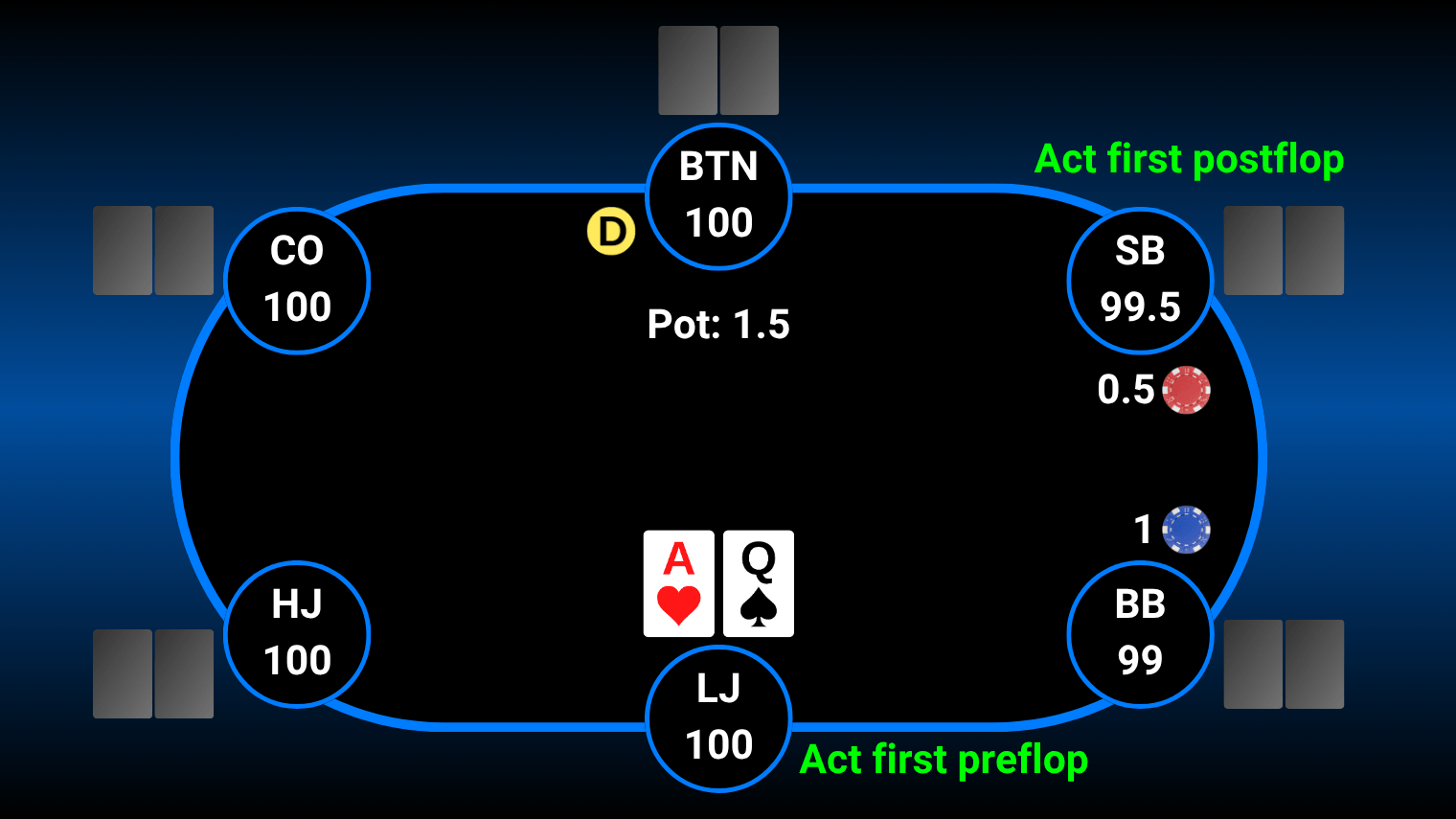
Having position on a player means that you act after them. The hijack has position on the lojack. The cutoff has position on the hijack. The button has position on everyone else postflop.
Preflop, the big blind acts last and therefore has position preflop. Postflop, the button has position on the big blind. This is why preflop and postflop position are different.
Absolute position describes where you sit relative to the button. The button has the best absolute position because it acts last after the flop. The cutoff is next best. Early positions are worst.
Absolute position matters most in heads-up pots. In a heads-up pot, the player with better absolute position acts last on every postflop street. That is why the small blind can feel fine preflop, with only one player left to act, but much worse after the flop, where the small blind always acts first.
In multiway pots, position is not only about where you sit. It is also about whether you close the action. That is called relative position.
For example, three players see the flop:
Player A: Bets.
Player B: Calls.
Player C: Is last to act.
Player C has the best relative position, because no one can act after them if they call. But if Player A bets, Player B raises, and it is Player C’s turn, the situation is less comfortable. Even though Player C still acts last, calling is not as safe, because Player A can still act again.
A simple way to think about this is:
Absolute position is about where you sit.
Relative position is about how safe it is to act.
The player first to act is often called under the gun.
Being first to act is difficult because many players are left to act behind you. The more players left to act, the more likely it is that someone has a strong hand. Because of this, you should play fewer and stronger hands from early positions, and more hands from late positions.
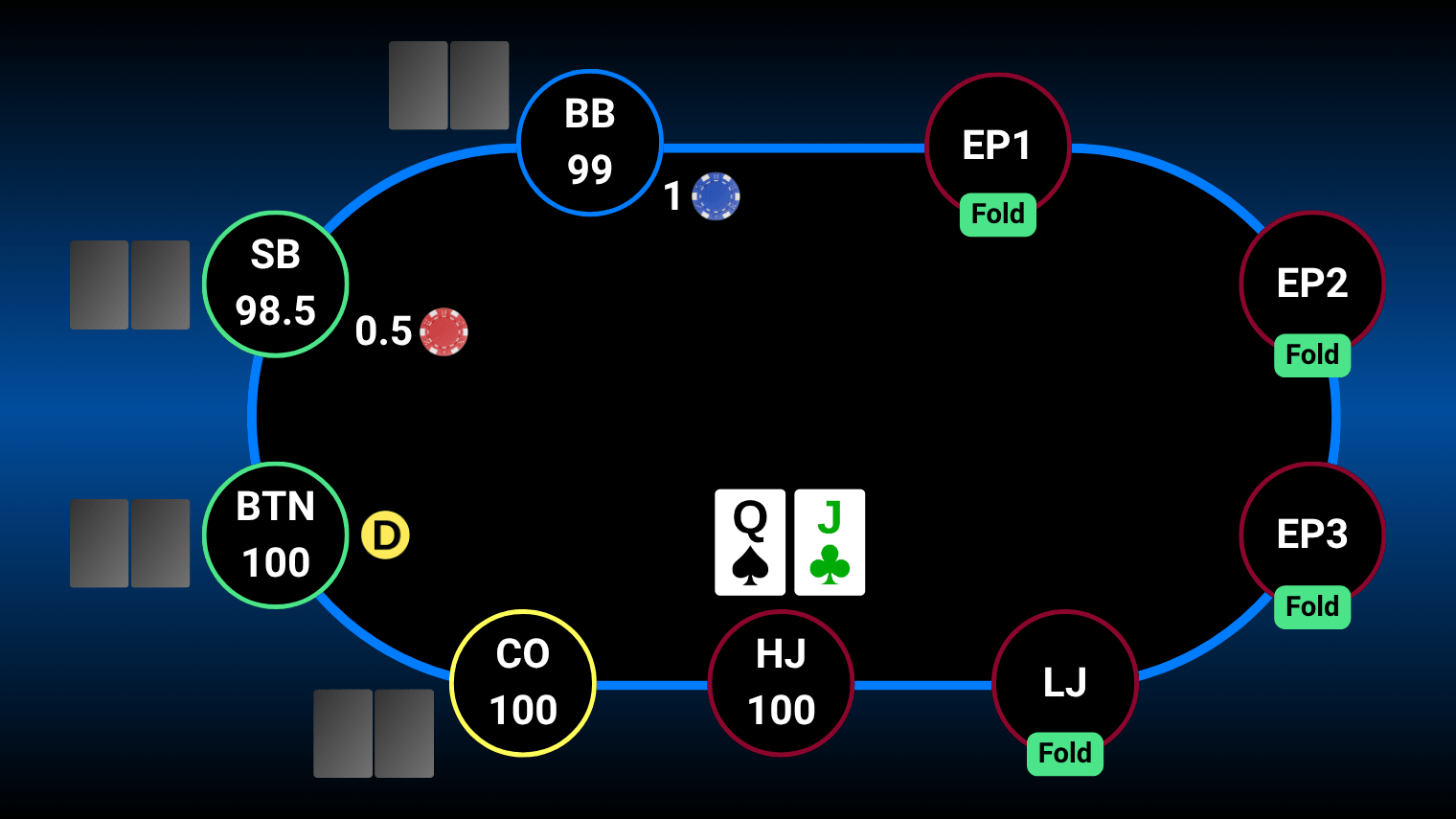
This adjustment alone is one of the simplest and most powerful ways to use poker position to your advantage.
Position affects almost every decision in poker. It affects:
Players who understand poker table positions make easier decisions and win more pots. Players who ignore position often struggle after the flop.
Preflop range charts are one of the fastest ways to improve your poker results. They give you a clear default strategy for which hands to play and…
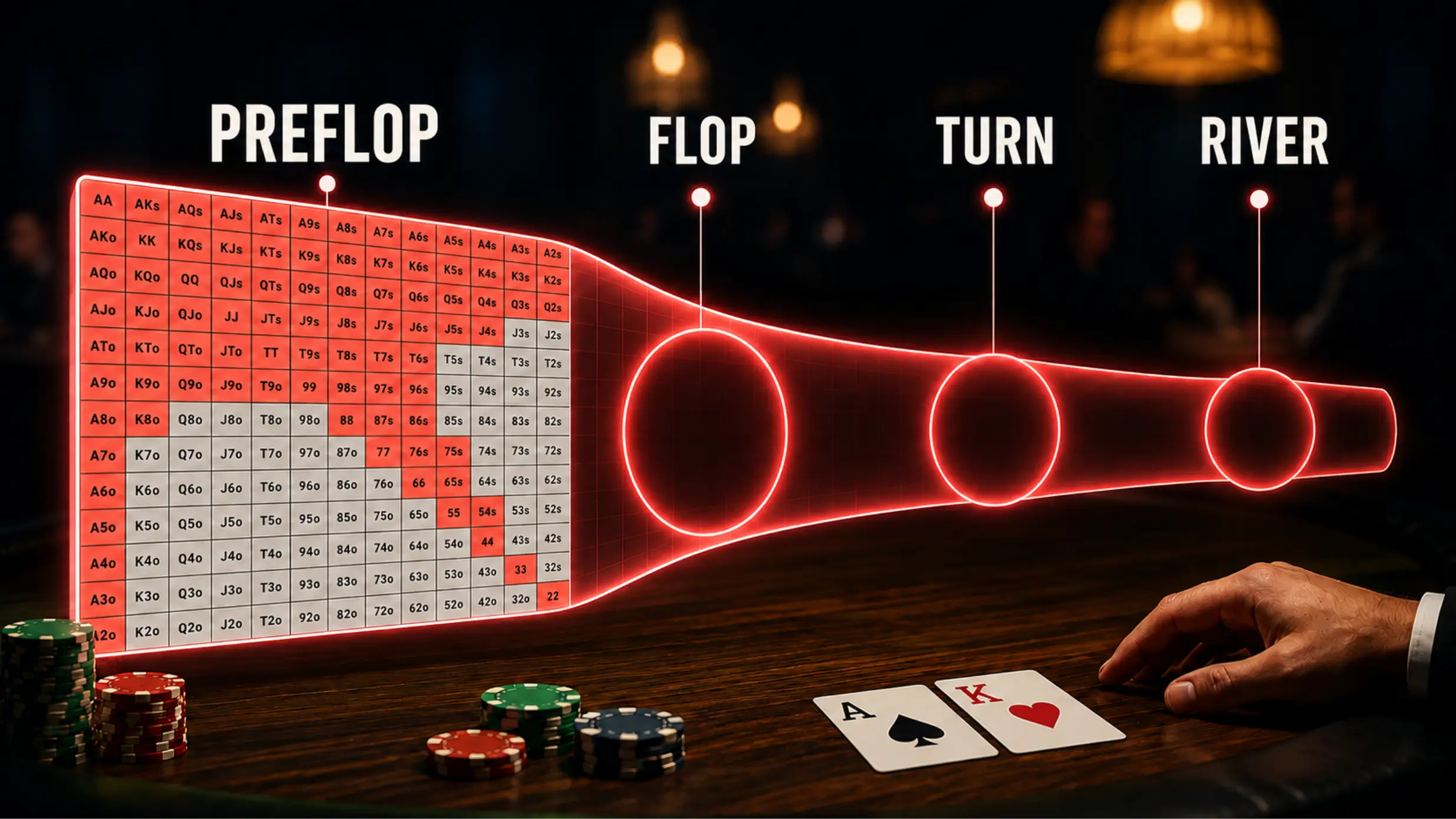
Poker hand reading means working out what hands your opponent can still have as the action unfolds. Good players…