
Preflop calling ranges
This article explains what a preflop calling range is and when cold calling poker actually makes sense in modern 6-max…
How to play
after the flop
Many hands end before the flop. But the biggest mistakes and biggest wins usually happen after the flop. That is where pots grow, ranges narrow and decisions start to cost real money.
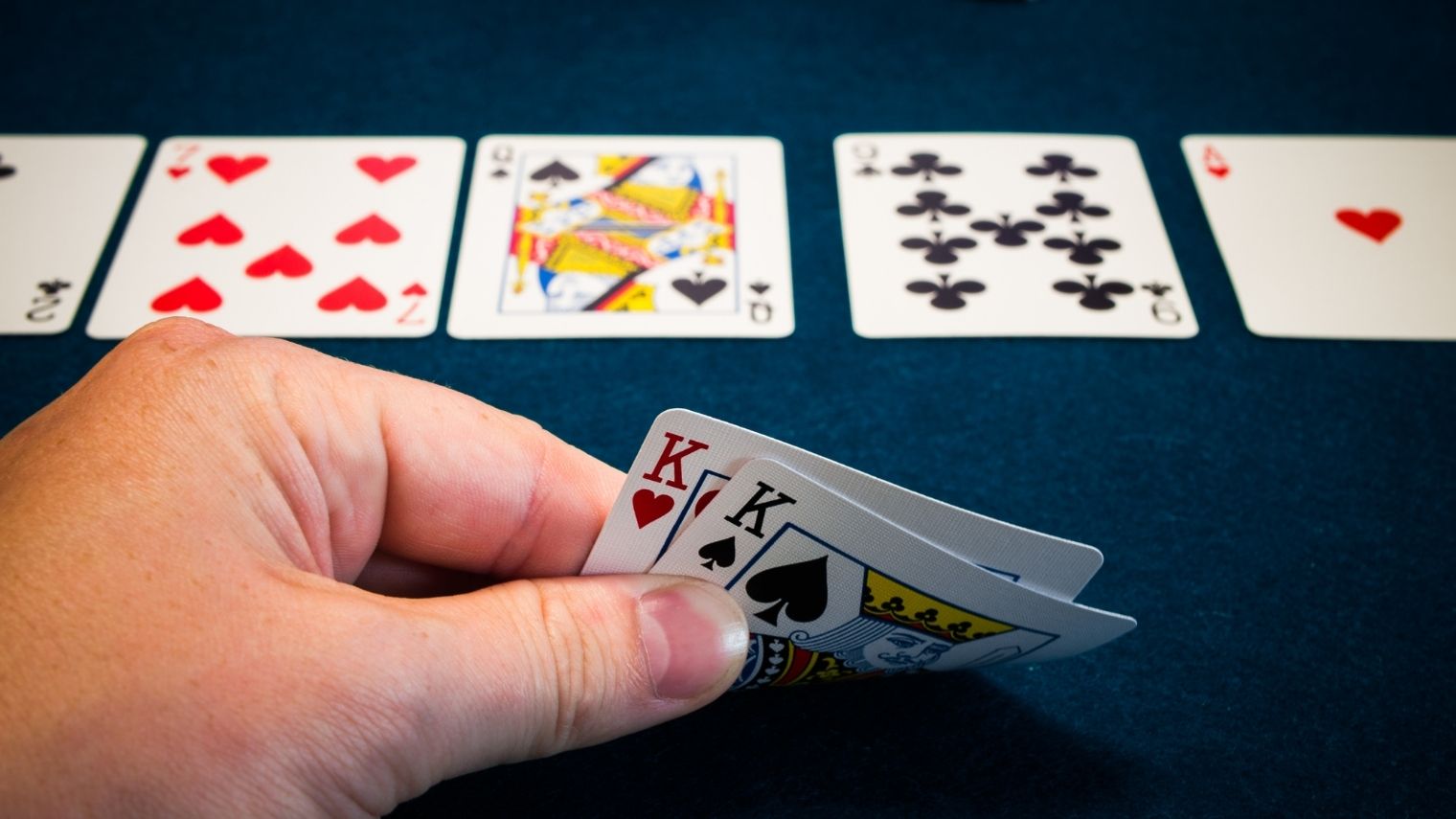
Postflop is also more complex than preflop. Preflop can often be learned with charts. After the flop, you must react to the board, your hand and the betting across the flop, turn, and river.
The Poker Simulator includes a Postflop Gameplan. Use it for the exact actions and sizes.
This article explains how to think at a higher level. The Postflop Gameplan is built from extensive research into:
It is heavily simplified, but grounded in both solid theory and real player pools.
After the flop, most decisions can be guided by three main inputs:
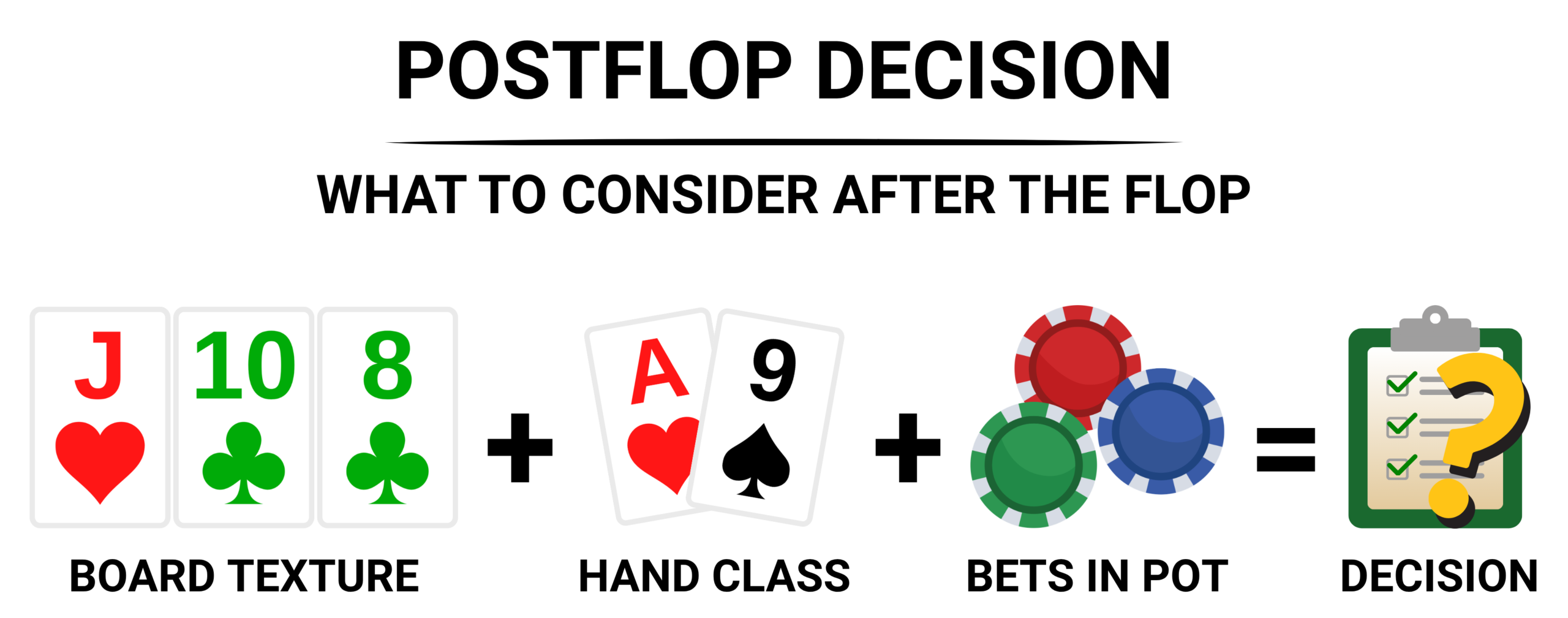
This checklist works on flop, turn, and river. The Postflop Gameplan is built around these inputs. If you get good at reading them, postflop becomes much easier.
Preflop ranges also matter, but less than you might think. Many postflop spots are driven more by board texture + hand class + betting pressure than the exact preflop ranges.
Example:
TPTK (top pair/top kicker) is often a strong hand both when:
The ranges are different, but the hand class is the same. Your plan is often similar. The board and the betting usually matter more than preflop range differences.
Opponents matter a lot. The default Postflop Gameplan is a balanced baseline built from GTO (game theory optimal) models. It works well against unknown opponents and against strong opponents.
But if you have a clear read on how someone is deviating, you should normally deviate too and exploit their mistakes.
Board texture describes how connected the flop is and how easy it is to make strong hands and draws. A useful first split is dynamic vs static.
Dynamic boards
A dynamic board is a board where many turn and river cards can change who is ahead. There are more draws and more “future cards” that shift equity and create pressure.
Static boards
A static board is a board where most turns and rivers do not change much. There are fewer draws and fewer scare cards, so hand strength stays more stable.
Texture affects two big things:
These two ideas matter because they decide who can bet more and how big they can bet.
Board texture can be grouped into:
These labels are from the preflop aggressor’s point of view.
Safe: Aggressor can usually continue aggression with more hand classes.
Neutral: Advantages are smaller, checking becomes more common.
Dangerous: Many hands connect well, you need a stronger hand to build a big pot.
HJ has more very strong hands as part of their range (sets, overpairs, two pairs, top pair/top kicker). HJ can c-bet with a wide range. HJ has both a nut advantage and an equity advantage at 59%. Explore this spot in the Poker Trainer Odds Calculator. HJ can choose between small and often or bigger and less often on this board texture.
Now the board interacts more with BB’s calling range (more suited hands, more low pairs, more made hands and draws). The aggressor strong preflop range has been neutralized. Equity and nuts are evenly distributed. Look up this spot in the Odds Calculator. The strategy includes more checks and more caution.
Now the turn creates four to a straight on the board (6-7-8-9). The board connects well with BB’s range (more two pairs, straights, and strong draws). HJ’s overpairs and top pairs become less comfortable and fold equity drops. The strategy shifts toward more checking, and you usually need a stronger hand to bet big.
Board texture influences betting through how it interacts with ranges:
If you are often behind, calling is uncomfortable even versus small bets. And if the opponent can credibly represent many monsters, big bets are scary, even if you know they must include bluffs too. In other words, when the bettor has a clear advantage, the defender is forced into a tough mix of folds and bluff-catches and it is easy to make expensive mistakes.
In the Poker Simulator, use the Board Texture label and its short explanation. It is the fastest way to build intuition.
Postflop becomes simpler if you group hands into hand classes. Names can vary, but the idea is stable:
On dangerous boards you need stronger hands to bet, raise or call.
Hand classes matter because they point to a default plan:
The same board plays differently depending on how much betting has happened.
That is why the gameplan changes when bets in pot postflop increases. The more aggression, the more you should expect strength.
Streets of value is a planning tool that helps you estimate how many future bets worse hands can realistically call.
A hand class has N streets of value if you can make N value bets across flop, turn and river that worse hands will call often enough. When we bet for value we benefit when the opponent calls with a worse hand on average.
Two key reasons it matters:
This is near the top of your range and the board is safe. Many worse hands can call on flop and turn. A common plan is bet flop and turn, then value bet river on safe runouts. In other words, your top pair/top kicker is worth 3 streets of value.
This is a top pair/top kicker on a safe, static board. Many worse hands can call several streets. A common plan is to bet flop and turn, then value bet the river on safe runouts. In other words, top pair/top kicker has 3 streets of value as it looks right now.
If the board becomes dangerous (a draw completes, or the runout favors the defender), you may reduce value and sometimes check. That is still “streets of value”, you are just adjusting to the runout. Streets of value is not fixed on the flop. It updates as new cards are revealed.
Practice in the Poker Simulator to learn a fundamentally sound default strategy.
This is not meant to be perfect versus every opponent. It gives you a strong, fairly balanced baseline that helps you learn faster. It is based on GTO, but simplified so you can actually use it in real games.
This article explains what a preflop calling range is and when cold calling poker actually makes sense in modern 6-max…
One of the most important concepts in poker is poker position. Where you sit at the table strongly affects which hands you can play, how…