
Poker hand ranking
In Texas Hold’em, each player gets two private cards (called hole cards). These are combined with the five community…

Preflop
3-betting ranges
A 3-bet is a re-raise before the flop. One player opens and you raise. That is called 3-betting.
If you learn one preflop skill that quickly increases your win rate, it is this. A good 3-bet strategy builds bigger pots with your best hands, wins pots preflop with fold equity and stops opponents from opening too wide.
This guide focuses on 6-max cash games with 100 bb effective stacks in a raked online environment. The exact ranges on this page are built for cash games, but the main principles apply in all formats. Stronger positions can defend wider and out-of-position calling is usually harder.
If you mainly play tournaments, the ideas still help, but the ranges will be different. Antes and no rake add dead money and improve pot odds, which often leads to more calling and wider defense than in cash games. In Poker Trainer you can explore the correct ranges for your format and stack depth in the Range Viewer.
If you are unsure what hands your opponent opens with, start with our guide to opening poker hands. Your 3-bets are only as good as your read on the opener’s range.
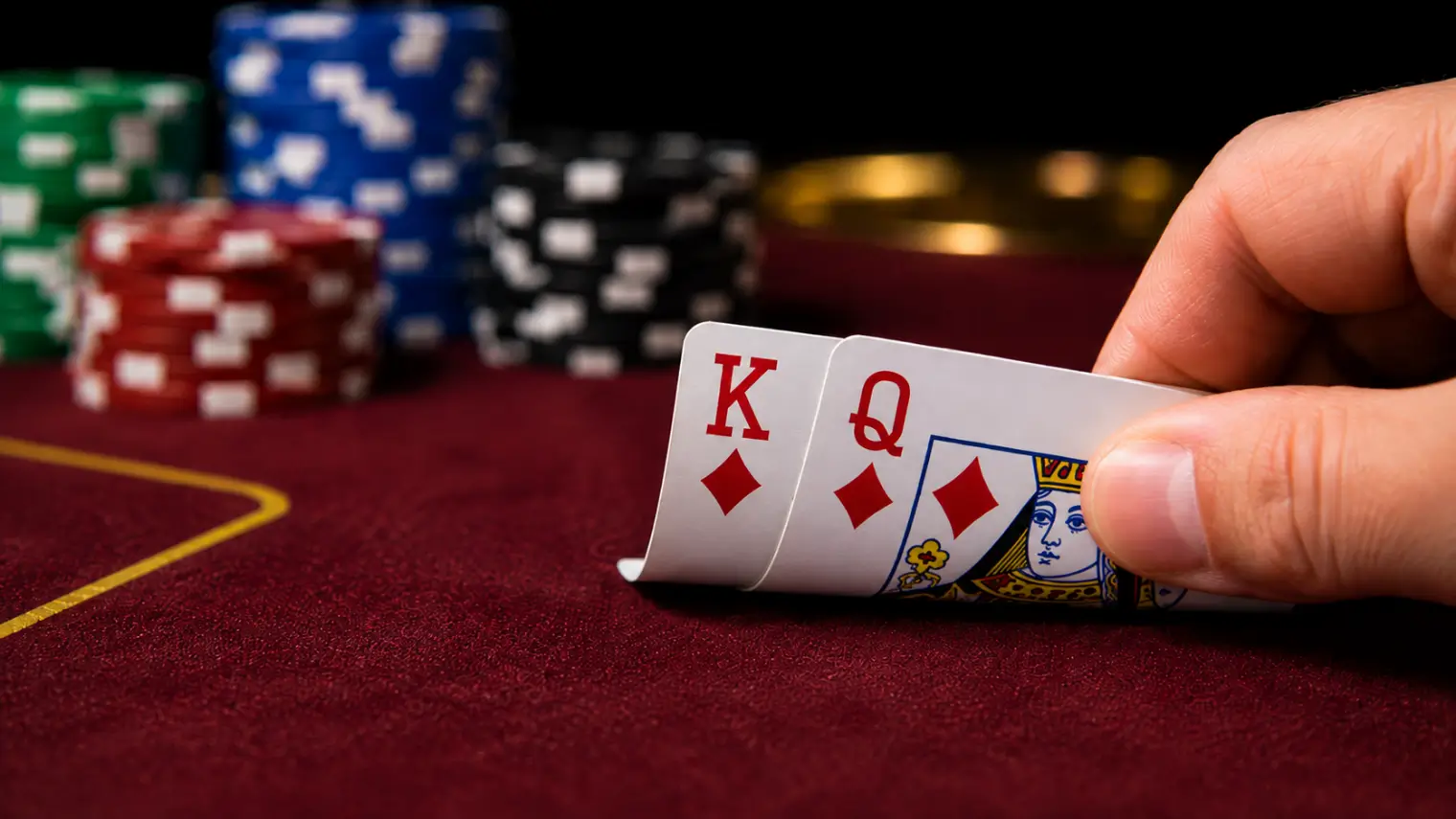
Preflop betting happens in “levels.” The big blind is the first forced bet. An open raise is the next bet. The next raise is the third bet, which is why it is called a 3-bet.
A modern 3-bet range contains two types of hands: value hands and bluff hands. Most good guides teach this same core idea.
There are two main reasons to 3-bet.
You 3-bet for value when you expect worse hands to continue. You want to build a pot because you are ahead.
You 3-bet as a bluff when you expect folds often enough or when your hand has good blockers and playability if you get called.
A third benefit matters a lot in cash games: 3-betting often gives you a cleaner strategy than cold calling. Calling can invite squeezes and often creates harder postflop spots, especially out of position.
Sizing has a big effect on which hands are profitable, so you should be consistent.
A common default is to 3-bet smaller in position and bigger out of position. Many modern sources recommend something close to 3x the open in position and 5x out of position (the old standard was 4x out of position).
If you want a deeper explanation of sizing logic and adjustments, read our guide to preflop bet sizing.
A big reason 3-bet strategy feels confusing is that 3-bet ranges do not all have the same shape. Some are more linear, while others are more polarized.
A linear 3-bet range is a strong “top-down” block of hands. You 3-bet many of your best hands, not only the very top. This is common in spots where calling is not very attractive, so you continue mainly by 3-betting or folding. In those spots, many medium-strength hands do not have a good calling option, so they stay in the 3-bet range.
A polarized 3-bet range only happens when you also have a meaningful calling range. In that case, many medium-strength hands prefer calling, so the 3-bets are built from two groups: strong value hands and bluffs. In the PTO ranges, calling ranges only exist on the button and in the big blind. That is one reason the clearest polarized 3-bet ranges appear in those positions, while most other spots are closer to linear 3-bet or fold structures.
The bluff hands are chosen because they work well as raises. Often they have blockers, meaning your cards make strong opponent hands less likely and they still have good playability if you get called.
Button 3-bet ranges are often less clearly polarized than big blind 3-bet ranges. The button can both call comfortably and 3-bet many strong playable hands, so the range often looks more merged than truly polarized.
Read more about different range types in our guide to range construction.
A good 3-bet bluff hand usually has at least one clear reason to be a raise.
One reason is blocking. Blocking means your cards remove some strong hands from your opponent’s possible holdings. For example, if you 3-bet with A5s, you hold an Ace. That makes it less likely your opponent has strong Ace hands like AA, AK, or AQ.
Normally there are 6 combinations of AA in the deck. But when you hold an Ace, only 3 combinations remain. The same thing happens with hands like AK and AQ. Normally there are 16 combinations of AK and 16 combinations of AQ. When you hold an Ace, only 12 combinations of each remain. This reduces the chance that your opponent has a very strong hand and increases the chance that they fold.
Another reason is playability. Good bluff hands should still have ways to win when they get called. Suited and connected hands can make strong draws and strong hands after the flop. A5s is a great example here too. It can make the nut flush and it can also make wheel straights like A-2-3-4-5, which gives it more ways to improve than many other bluff hands.
A third reason is that the hand sits near the bottom of the continuing range. Some hands are not folds, but they are slightly awkward calls. In those cases, raising and trying to win the pot immediately can be more attractive than calling and playing a difficult pot later. This is especially common in highly polarized spots, where stronger medium hands prefer calling and the weaker edge of the range gets used as bluffs. An example is T2s in BB vs SB.
PTO only uses the first and second categories for 3-bet bluffs. Hands from the third category mix between calling and raising in full GTO solutions. They work in theory, but they are harder to play well after the flop when the 3-bet gets called. For that reason, PTO leaves them out as bluff 3-bets and instead stays closer to the overall GTO bluffing frequency by raising a bit more often with bluff hands that have better blockers and better playability.
If you want a deeper explanation of hand types and why some hands play better than others, see our guide to preflop starting hands.
The charts in this article are built for 6-max cash games with 100 bb effective stacks in a typical online raked environment. They are based on NL50-style rake, which slightly favors tighter and more playable ranges compared to no-rake games. At higher stakes with lower rake, some marginal hands can become slightly more profitable.
The preflop sizing used for these charts is an open raise of 2.5 bb from LJ, HJ, CO, and BTN, and an open raise of 3 bb from the small blind.
Poker Trainer includes two types of ranges: PTO and GTO (game theory optimal).
GTO ranges are direct solver outputs and include mixed frequencies where the same hand may take different actions at different percentages.
PTO (Poker Trainer optimized) ranges are built from those solver outputs but simplified to use pure decisions and to be easier to learn and execute.
If you want a deeper explanation of how PTO ranges are constructed and why they work well in practice, see our guide to preflop opening hands.
For most beginners and intermediate players, PTO is the best starting point. As you improve, you can explore the GTO ranges as well.
The PTO 3-bet ranges are designed to stay very close to optimal across open sizes from 2 bb to 3 bb. This works because preflop 3-bet ranges are generally less sensitive to raise size changes than big blind calling ranges. You can explore this yourself in the Range Viewer by comparing with the GTO ranges for different open sizes.
Below are the main 3-bet spots you should learn for 6-max. These are the situations that repeat constantly in real games.
Important note about modern raked 100 bb strategy: calling versus an open is limited from most positions. In the PTO ranges, calling ranges only exist on the button and in the big blind. All other positions use a 3-bet or fold structure when facing an open. This keeps the strategy simpler and avoids difficult spots where players behind you could squeeze.
Several common 3-bet spots in 6-max share the same simplified PTO 3-bet range. Instead of memorizing many slightly different charts, you can learn one stable range that works across multiple positions.
This shared 3-bet range appears in the following situations:
In the full GTO solutions, these spots differ slightly in exact frequencies and sometimes in the presence of a calling range. However, the actual 3-bet hands are very stable across these positions. Because of that, using one shared PTO range creates essentially no EV loss while making the strategy much easier to learn and execute.
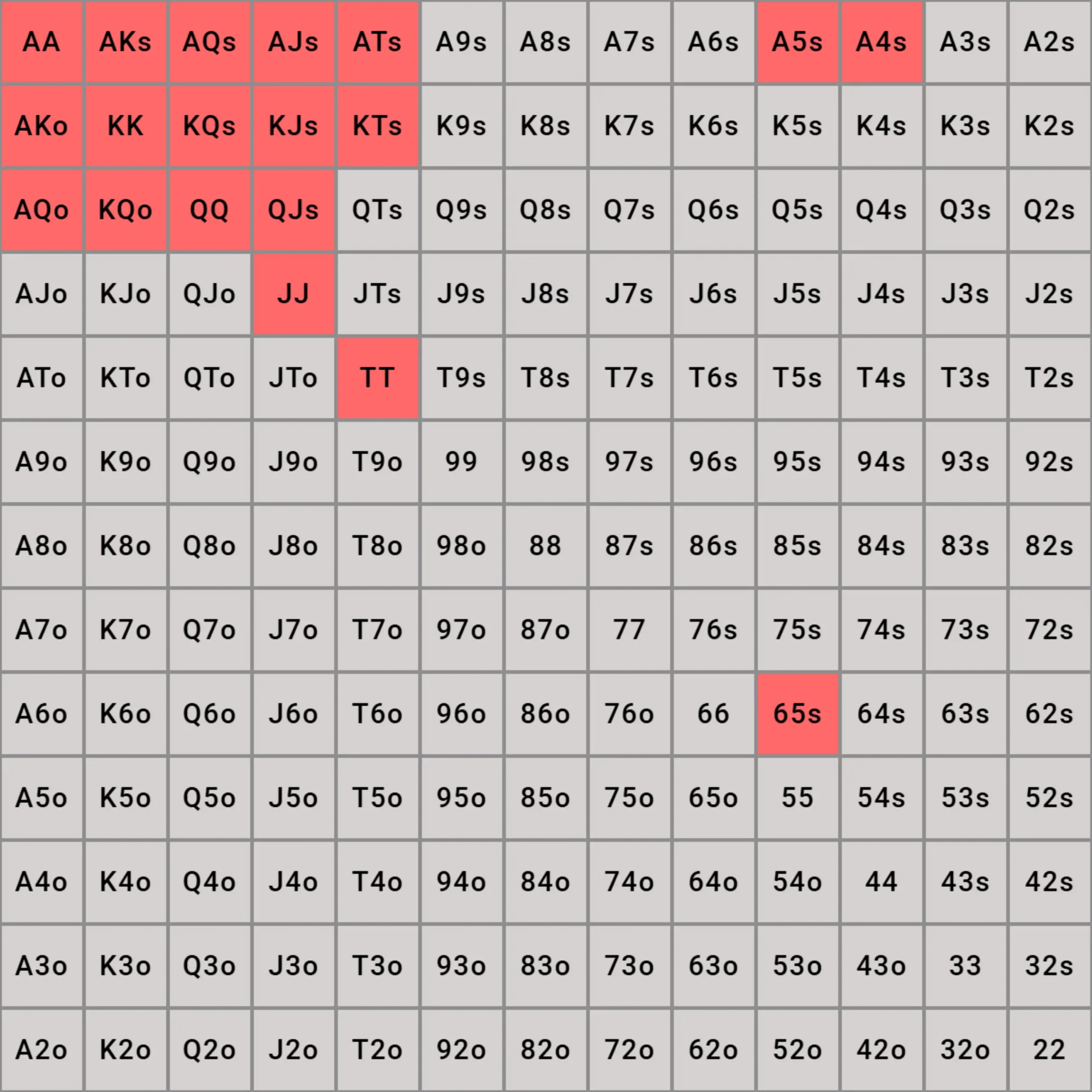
This 3-bet range is relatively tight because it is used against fairly strong opening ranges.
The value portion consists mainly of strong broadways and high pocket pairs, such as AQ+, TT+, and KQs, which perform well when called.
The lighter part of the range focuses on suited hands with good playability. A5s and A4s are common solver bluff candidates because they block strong hands like AA and AK, can make the nut flush and can also make wheel straights. A suited connector, 65s, is included as well. It does not block strong hands, but it has good postflop playability and helps your range connect with lower board textures (improves board coverage).
When the cutoff opens, the opening range is significantly wider than from earlier positions. Because of that, the solver responds by 3-betting more aggressively from the button.
In this spot, the PTO strategy expands the 3-bet range slightly compared to the earlier positions. The added hands mostly come from hands that mix between call and 3-bet in the GTO solutions. Turning them into pure 3-bets simplifies the strategy while remaining very close to optimal.
The value portion still contains strong hands such as AQ+, TT+ and strong suited broadways. The lighter part of the range expands to include more suited connectors and some additional suited aces, which benefit from position and perform well when called.
Because the button also has a calling range, some medium-strength hands are placed in the calling range.
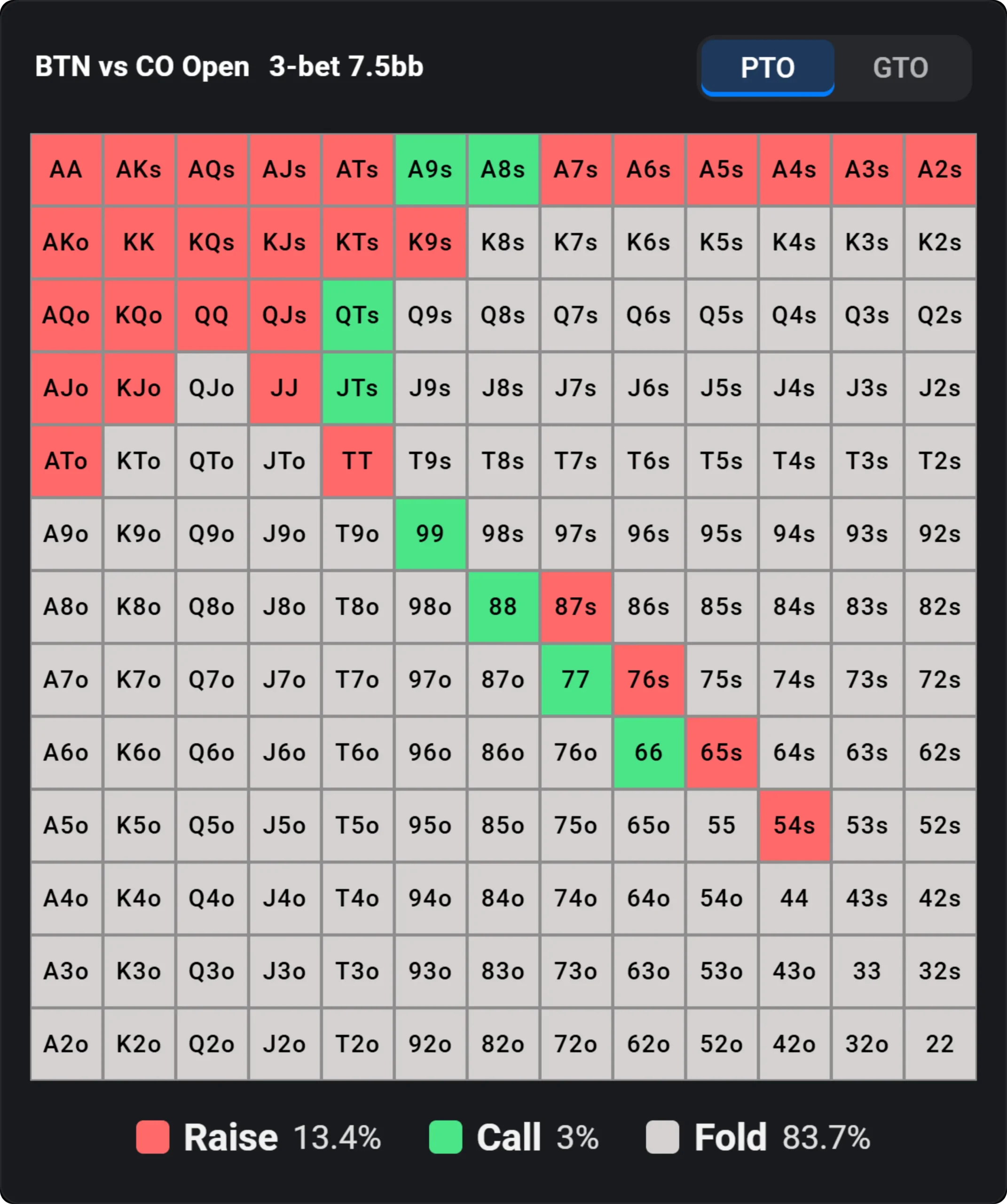
When the button opens, the opening range is very wide. Because of that, the small blind can 3-bet more aggressively than against earlier positions.
In the PTO strategy, the small blind uses a 3-bet or fold approach. Calling is avoided because the big blind is still behind and could squeeze and because playing a multiway pot out of position is difficult.
The value portion of the range expands to include hands like AJo, KQo, and smaller pocket pairs, in addition to strong hands such as AQ+, TT+ and strong suited broadways.
The lighter part of the range includes suited wheel aces and suited connectors, such as A5s–A3s and 65s, which combine blockers and good postflop playability.
Even though the button opens wide, the presence of the big blind behind you and being out of position postflop still limits how aggressive you can be. For that reason, the range expands compared to earlier spots but remains structured and disciplined.
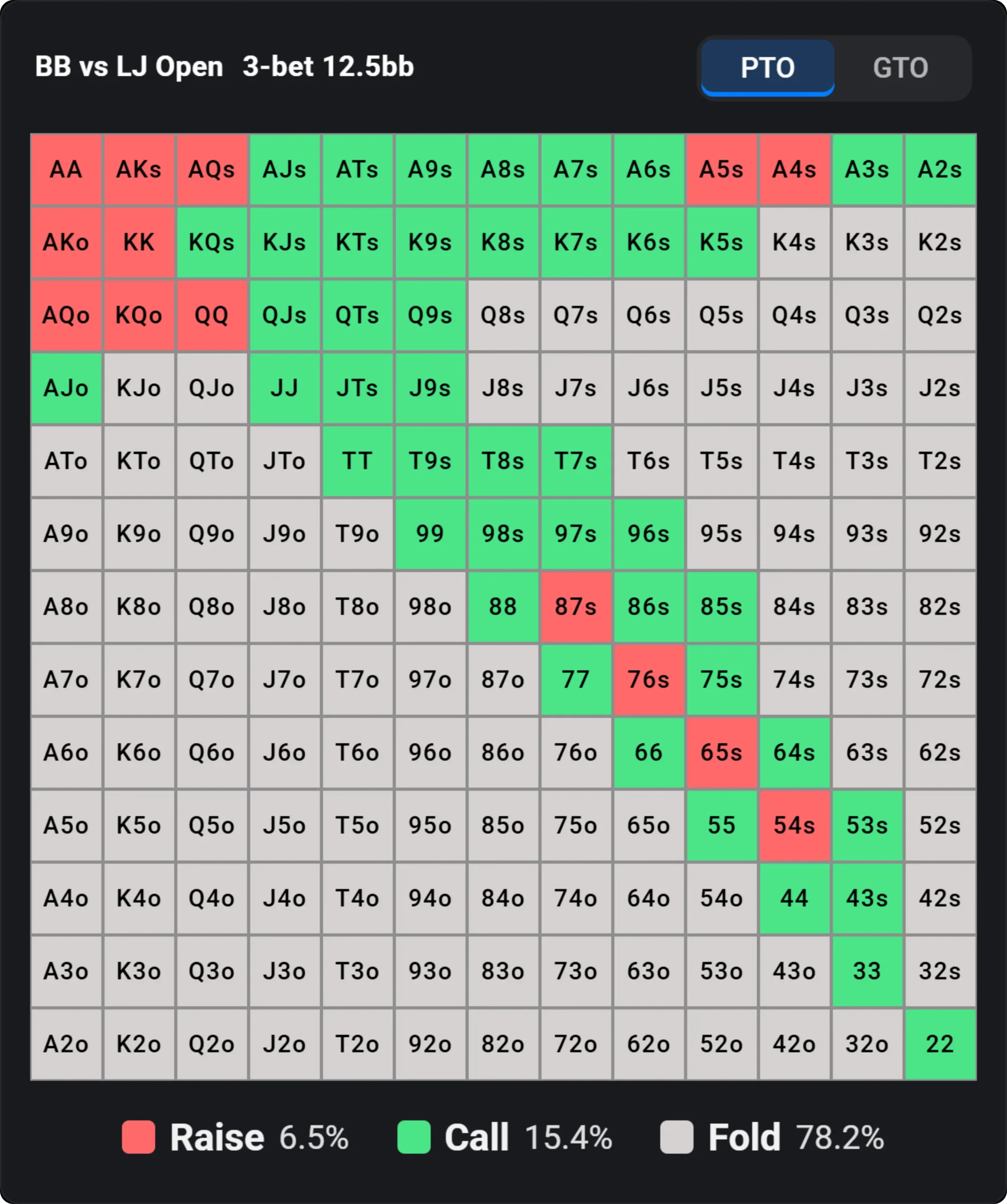
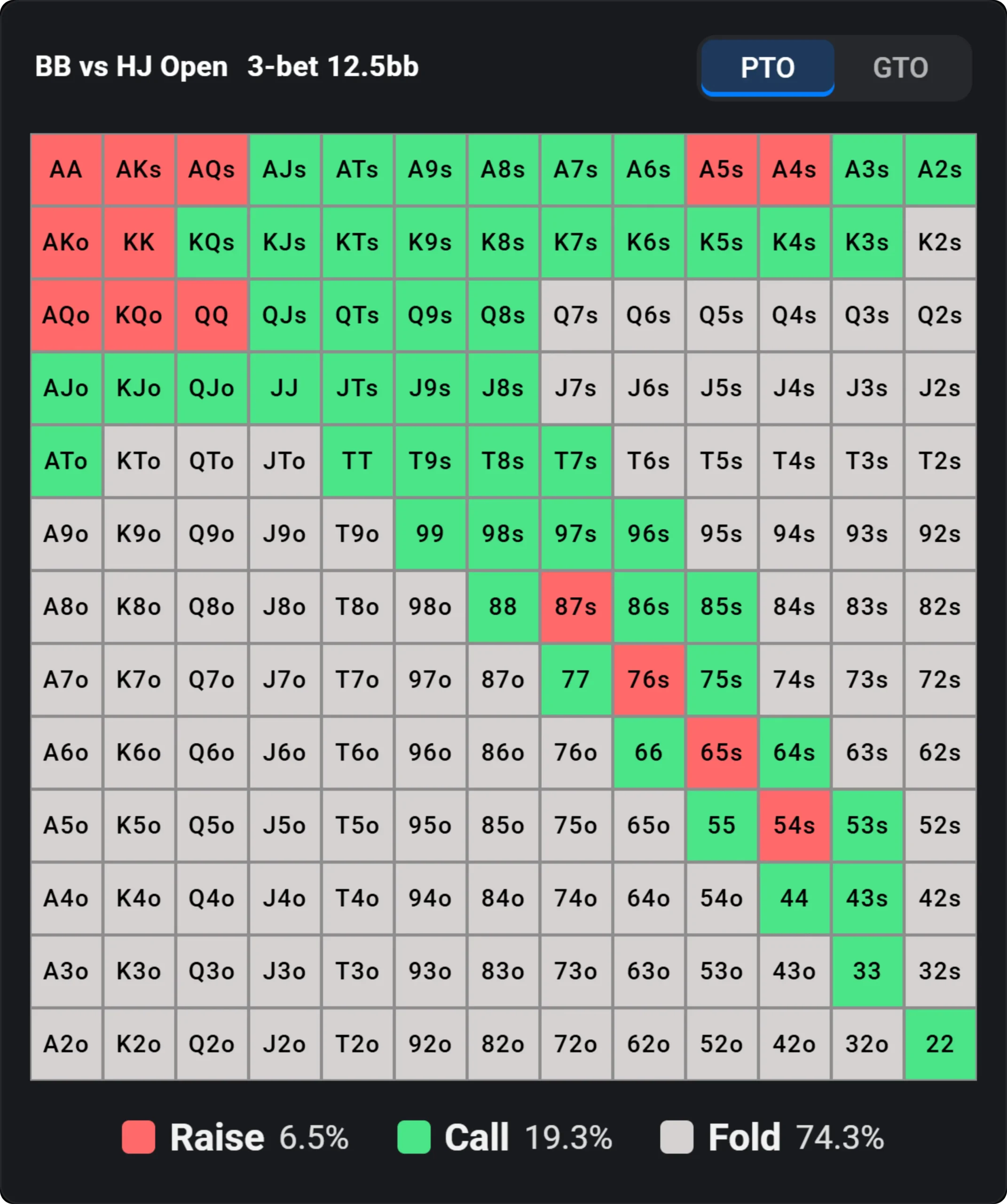
The big blind is different from other positions. You already have one big blind invested and you close the action, so no one can squeeze behind you. Because of this, many medium-strength hands prefer calling instead of 3-betting.
This creates a more polarized 3-bet range. The value portion contains the strongest hands such as QQ+, AK and strong broadways, while the lighter part of the range focuses on suited hands with good playability, like A5s–A4s and suited connectors.
Most medium-strength hands prefer calling to realize their equity without building a large pot out of position.
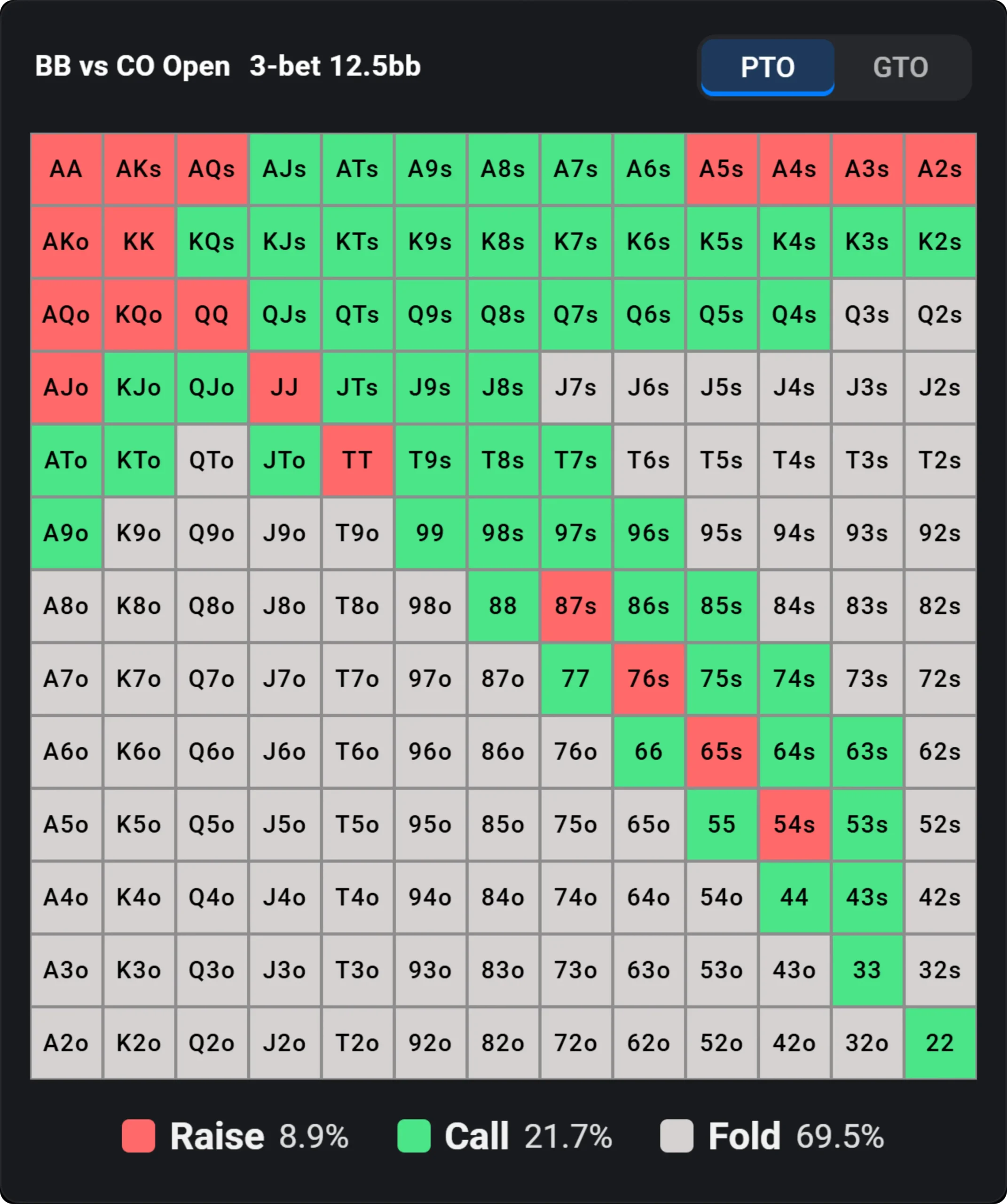
When the cutoff opens, the opening range is fairly wide. Because the big blind closes the action and already has one blind invested, many hands become profitable calls.
As a result, the 3-bet range remains relatively polarized. The value portion contains strong hands such as AQ+, TT+ and strong broadways, which are happy to build a larger pot against a wide opening range.
The lighter part of the range includes suited hands with good playability, such as suited connectors and suited wheel aces. Hands like 76s, 65s, and A5s–A4s can make strong draws and strong hands on many board textures while still performing reasonably well when called.
Most medium-strength hands, including many suited connectors, suited gappers and pocket pairs, prefer calling instead. Calling allows these hands to realize their equity without building a large pot out of position.
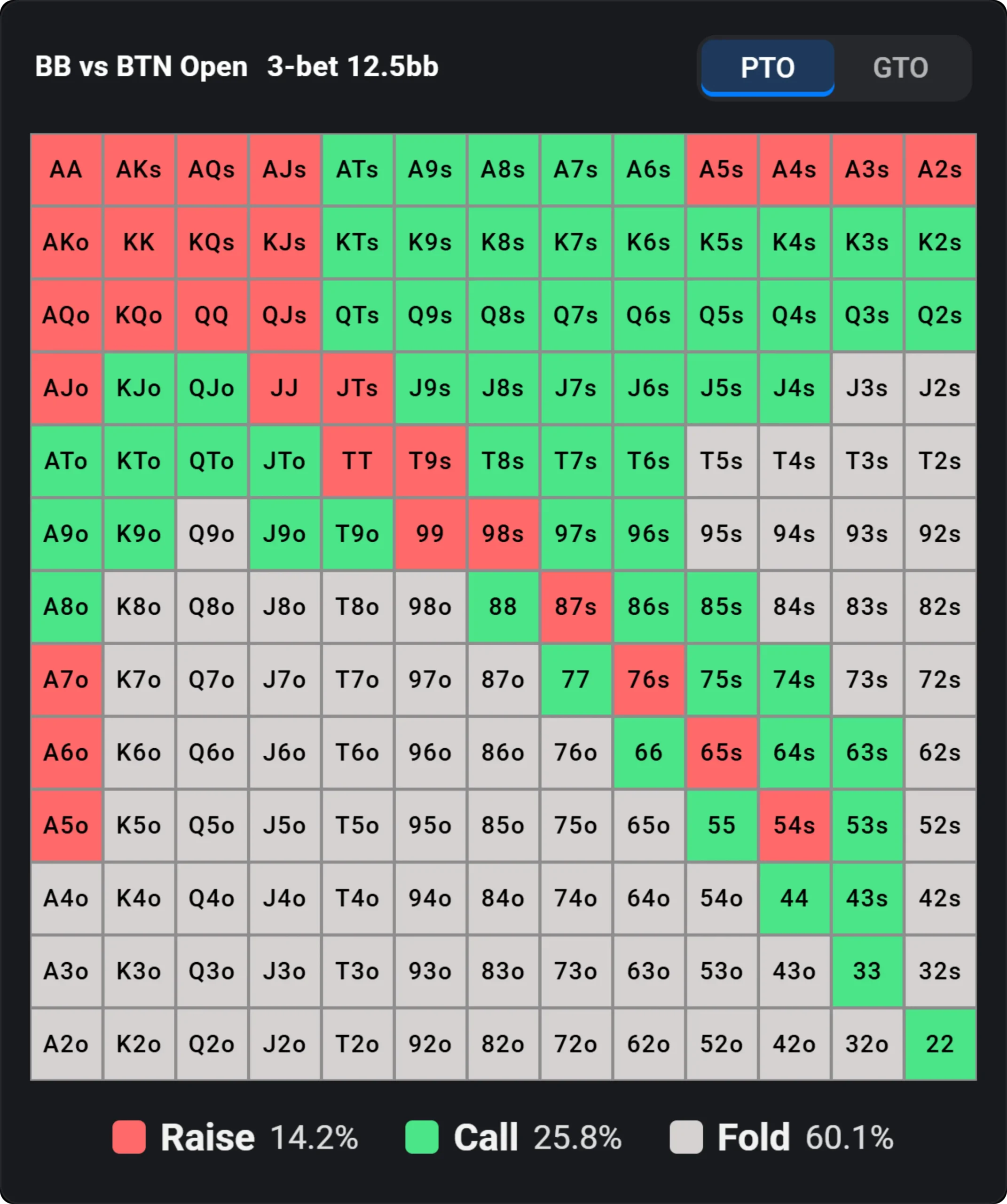
When the button opens, the opening range is extremely wide. Because the big blind closes the action and already has one blind invested, it can defend very wide.
Most hands prefer calling rather than 3-betting, because calling allows you to realize equity without building a large pot out of position. As a result, the 3-bet range becomes more polarized.
The value portion includes strong hands such as AJ+, 99+ and strong broadways, which perform very well against the button’s wide opening range.
The lighter part of the range includes several groups of hands.
Low suited aces (A2s–A5s) are common because they block strong hands like AA and AK and can still make nut flushes and wheel straights.
Suited connectors, such as 76s, 65s, and 54s, add playability and help your range connect with lower boards.
In addition, some offsuit aces, especially A5o–A7o, appear as aggressive raises in this polarized spot.
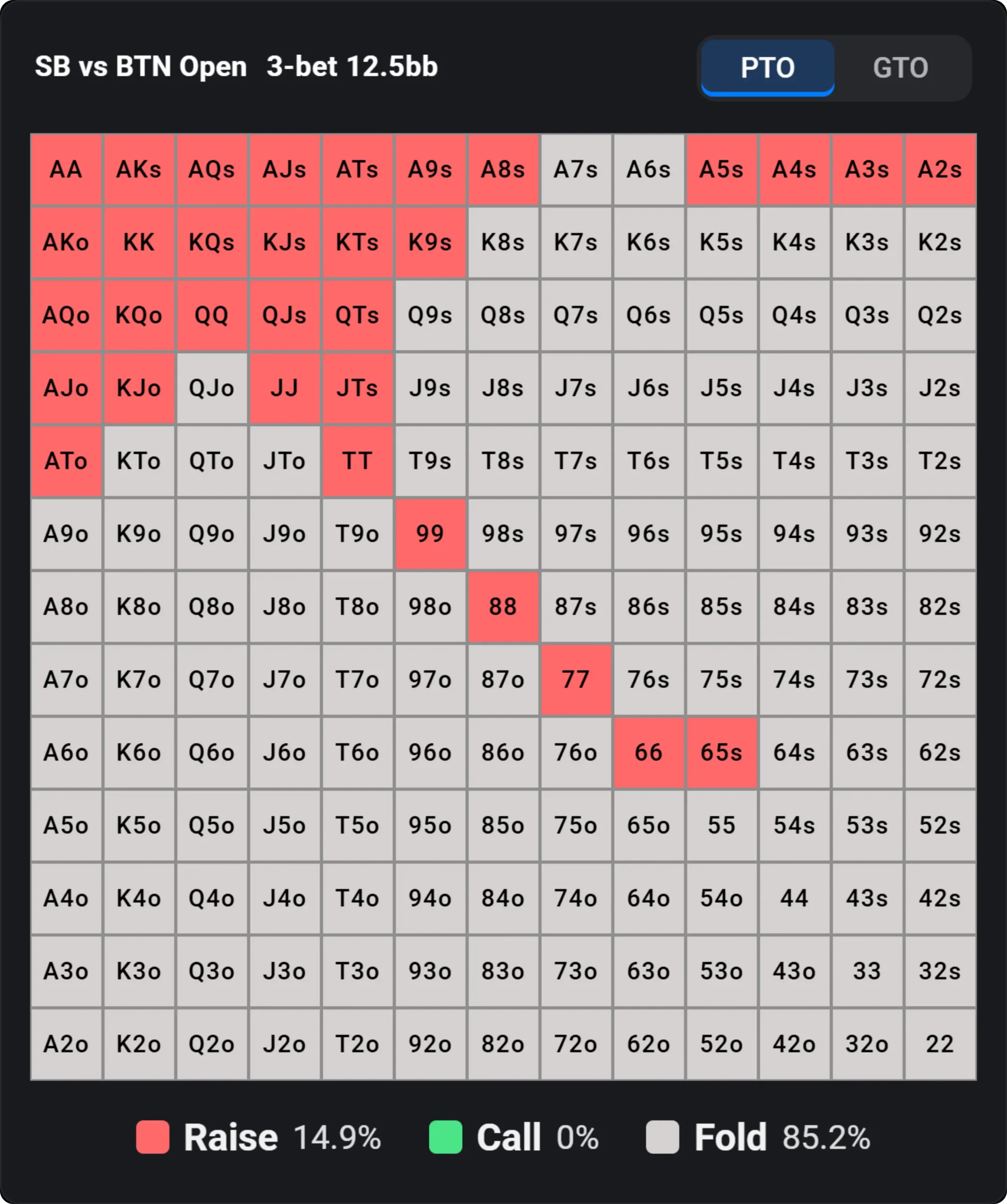
When the small blind opens, the opening range is extremely wide. The big blind also closes the action and already has one blind invested. Big blind will also be in position postflop. This allows it to defend very aggressively, and creates the widest and most polarized 3-bet range in 6-max play.
Compared to BB vs BTN, we have extended the 3-betting range with ATs-QTs and A2o-A4o to make it even more polarized.
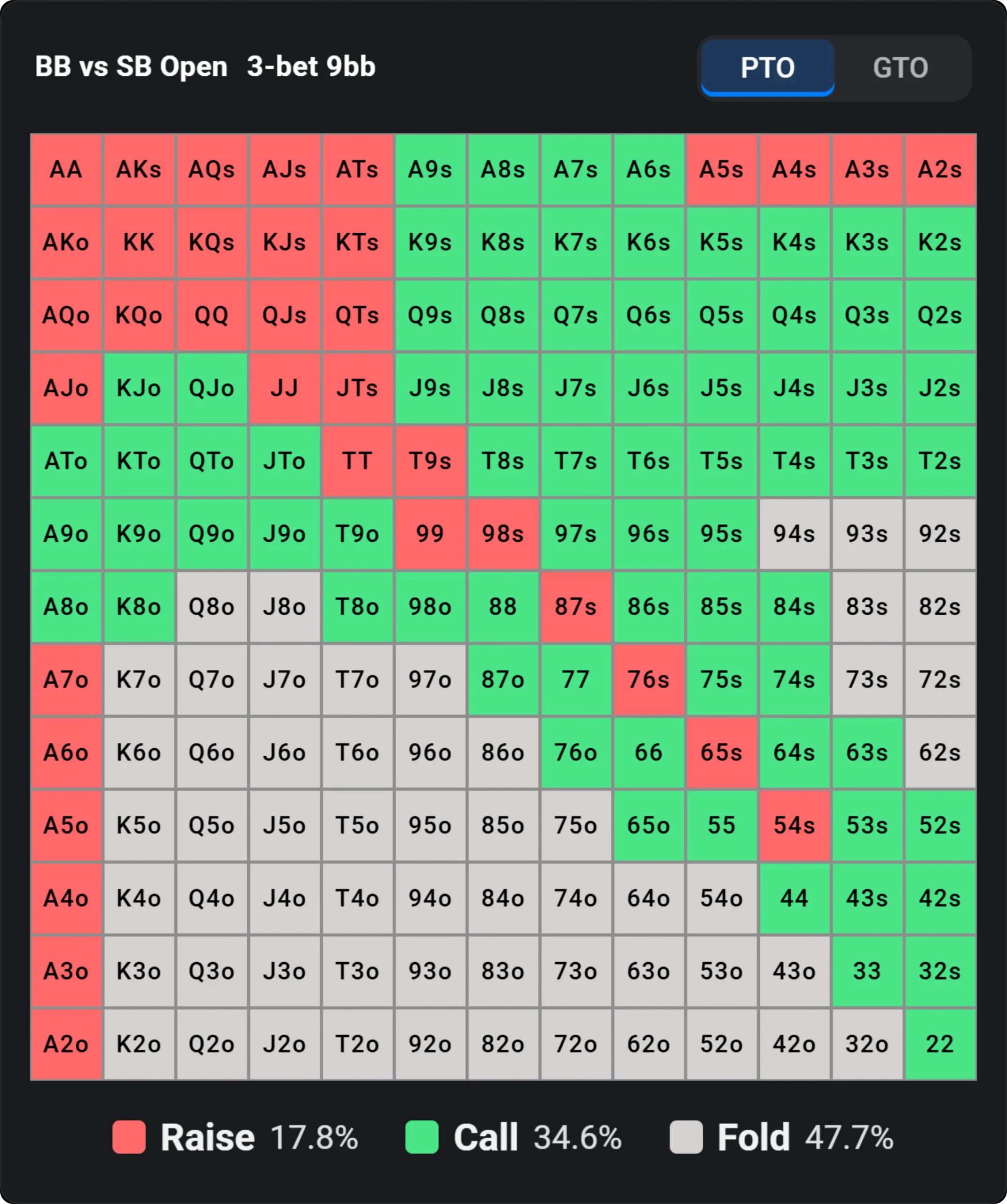
Many players 3-bet too tight and only re-raise premium hands. That allows opponents to open too wide and fold too easily once you finally show aggression. Reputable modern strategy sources consistently warn against being too passive in these spots.
The opposite mistake is 3-betting too wide with hands that play badly when called, especially out of position. Good 3-bet candidates usually need either blockers, strong playability or both.
Another very common leak is using the same 3-bet frequency against every position. Early opens are stronger and should be attacked more selectively, while later opens are wider and can be attacked more aggressively. Range shape also changes by spot, with some situations using more linear 3-bets and others more polarized ones.
Learning when to 3-bet for value and when to use the right lighter hands creates a stronger and much harder-to-exploit preflop strategy.
Do not try to memorize every square in the chart. Strong players learn patterns, borders, and a few key anchor hands.
Start by studying spots in a natural order, from tight ranges to wide ranges. Begin with 3-betting versus an LJ open, then move to HJ, then CO, then BTN, then SB and finally BB. This makes it easier to see how your range expands as the opener gets wider.
Use hand categories to simplify the chart. Think in groups like pocket pairs, suited aces, offsuit aces, broadways, and suited connectors. Then learn the weakest hand you still 3-bet in each group.
Focus on the border of the range. Most hands are clear folds or clear raises. The thin edge is where most mistakes happen.
In Poker Trainer, you can explore exact scenarios in the Range Viewer. Then practice the same spots in Preflop mode inside the Poker Simulator. Repetition with feedback is the fastest way to turn opening ranges into automatic decisions.
A strong 3-bet strategy is a core part of modern poker. It is not only about big pairs. It is about building the right mix of value and lighter hands, choosing good sizes, and adjusting by position.
3-betting also works together with the rest of your preflop strategy. Your decisions depend on what ranges open the pot and which hands prefer calling instead of 3-betting.
If you want to understand the full structure, you should first learn opening poker hands, which define the ranges you are attacking, and preflop calling ranges, which explain when calling is an option to raising.
Once these pieces fit together, your preflop strategy becomes more aggressive, consistent, and difficult to exploit.
In Texas Hold’em, each player gets two private cards (called hole cards). These are combined with the five community…

Preflop bet sizing has changed a lot over the years. Before solvers, many players used much larger raise sizes by default. Modern strategy usually…
| Cookie | Duration | Description |
|---|---|---|
| cookielawinfo-checkbox-analytics | 11 months | This cookie is set by GDPR Cookie Consent plugin. The cookie is used to store the user consent for the cookies in the category "Analytics". |
| cookielawinfo-checkbox-functional | 11 months | The cookie is set by GDPR cookie consent to record the user consent for the cookies in the category "Functional". |
| cookielawinfo-checkbox-necessary | 11 months | This cookie is set by GDPR Cookie Consent plugin. The cookies is used to store the user consent for the cookies in the category "Necessary". |
| cookielawinfo-checkbox-others | 11 months | This cookie is set by GDPR Cookie Consent plugin. The cookie is used to store the user consent for the cookies in the category "Other. |
| cookielawinfo-checkbox-performance | 11 months | This cookie is set by GDPR Cookie Consent plugin. The cookie is used to store the user consent for the cookies in the category "Performance". |
| viewed_cookie_policy | 11 months | The cookie is set by the GDPR Cookie Consent plugin and is used to store whether or not user has consented to the use of cookies. It does not store any personal data. |