Poker
downswing

What is a poker downswing and why does it happen?

Poker is a game of skill and luck. Even very good players will have periods where they lose more than usual. This is called a downswing.

Chalk drawing of declining bar chart with downward arrow on blackboard.

A downswing does not mean that you suddenly became a bad player. It is a normal part of poker. What matters is how you handle it.

When you are losing, it is easy to feel that nothing works. You may start to doubt yourself. You may also start to care too much about short-term results. That is often when people make their worst decisions.

When a downswing becomes a problem

Losing money is not the only risk. A downswing can start to affect your mood, sleep, and daily life. It can create stress, anger, or anxiety.

It can also create financial pressure. If you feel forced to win back money, you may take bigger risks. That makes the downswing worse.

A warning sign is when poker stops feeling controlled. Another warning sign is when you keep playing even though you know it is harming you.

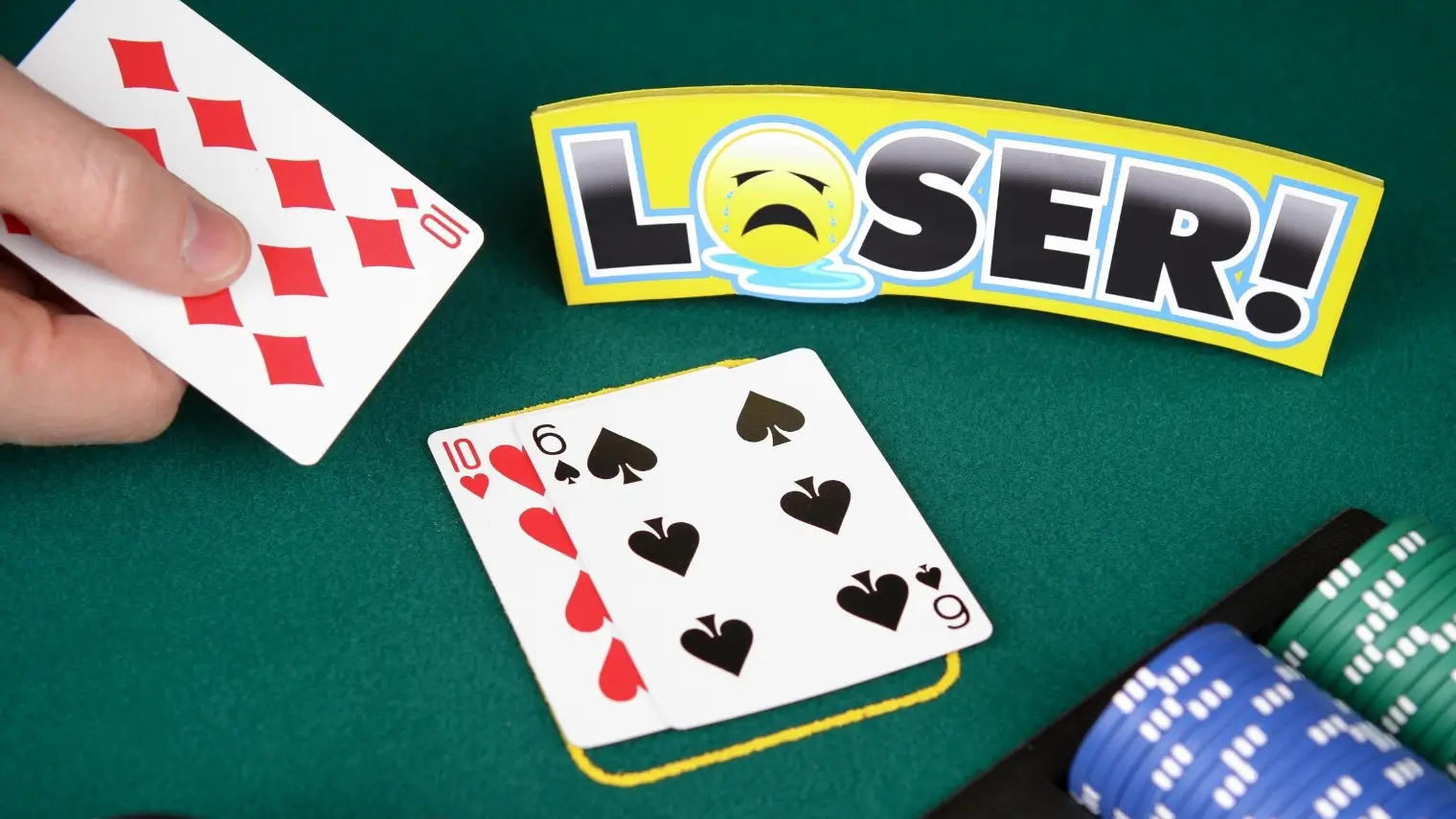
Poker hand where ten of diamonds loses to ten and six on green poker table with “Loser” sign.

Bankroll management matters more than ever

Many downswings become dangerous because of weak bankroll management. If you play stakes that are too high, normal variance becomes a serious problem.

Even good decisions can lose in the short term. If your bankroll is too small, you have no safety margin. Then every bad session feels like a crisis.

A simple rule is to only play with money you can afford to lose. Poker money should never be money you need for rent, food, or bills.

When you should stop completely

For some players, it is healthiest to stop playing poker completely.

This is especially true if you are losing money you cannot afford. It is also true if you play mainly to recover losses. Another sign is if you feel unable to step away, even when the consequences are clearly negative.

Stopping is not a failure. It is a responsible decision.

If you need support, talk to someone you trust. You can also contact a gambling support organization. Asking for help is a sign of strength.

Stop sign next to the words “Stop Gambling” written in chalk on blackboard.

Taking a break is often the best first step

Many players do not need to quit forever, but they do need a break.

A break helps you reset your mind. It gives you space from the pressure of results. It also lets you focus on sleep, health, exercise, and normal routines.

Do not push through if poker does not feel enjoyable or balanced. Take a pause first.

Returning in a smart way

How you come back matters when you return after a break.

Start at the lowest stakes. Give yourself time to rebuild confidence and discipline. Move up when you are winning consistently and feel stable.

Do not raise stakes to win back losses. That is one of the fastest ways to lose control.

Keep following bankroll rules. A solid bankroll plan protects you from normal variance and reduces emotional pressure. It also makes it easier to make good decisions when results are temporarily bad.

How to improve during a downswing

A downswing can hide problems in your game, but it can also create problems that were not there before. Your focus should be on decision quality, not short-term results.

Play with fewer distractions. Choose games carefully. Quit sessions when you feel tired, tilted, or unfocused.

Review hands away from the table. Study spots where you often feel unsure. Practice in controlled environments where you can learn without pressure.

Some players also benefit from structured guidance. A coach can help you rebuild discipline and find leaks you do not see on your own. Coaching is not a shortcut or a guarantee. It is support.

Training tools like Poker Trainer can also help you practice specific skills with less stress than real money games. The goal is steady learning, not quick fixes.

Keep poker in the right place

Poker should be a controlled and enjoyable activity.

If it stops being healthy, stepping away is the right choice. That can be temporary or permanent.

Poker is optional. Your well-being is not.

Related content
Preflop poker range chart showing different starting hands color-coded by recommended action.

Preflop range charts

Preflop range charts are one of the fastest ways to improve your poker results. They give you a clear default strategy for which hands to play and…

Read more »
Poker chips labeled small blind, big blind and dealer.

Poker positions

One of the most important concepts in poker is poker position. Where you sit at the table strongly affects which hands you can play, how…

Read more »